
AD3000-TPA vs AD3000-TPB: Which Infant Resuscitator Fits Your Hospital?
Short answer: The AD3000-TPB has a built-in air–oxygen blender with a flowmeter (0–15 L/min) and FiO₂ control (21%–100%, ±3%). The AD3000-TPA does not — it takes gas from an external blender or flowmeter. Everything else is the same: same T-piece resuscitation, same maximum PIP of 60 cmH₂O, same PEEP range, same masks and test lung, same registration. If your setup already has an external blender, choose the TPA. If you want FiO₂ control built into the unit, choose the TPB.
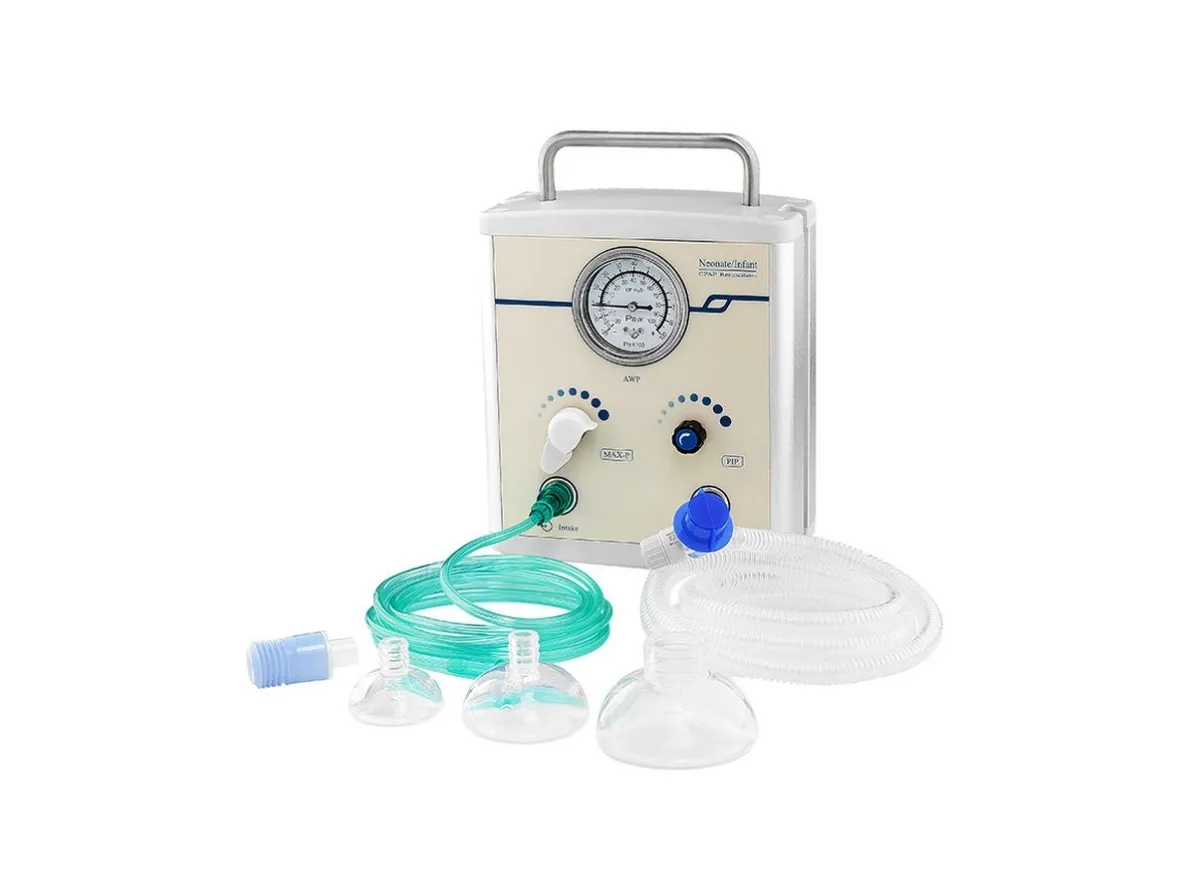
AD3000-TPA — no built-in blender; gas comes from an external blender or flowmeter.
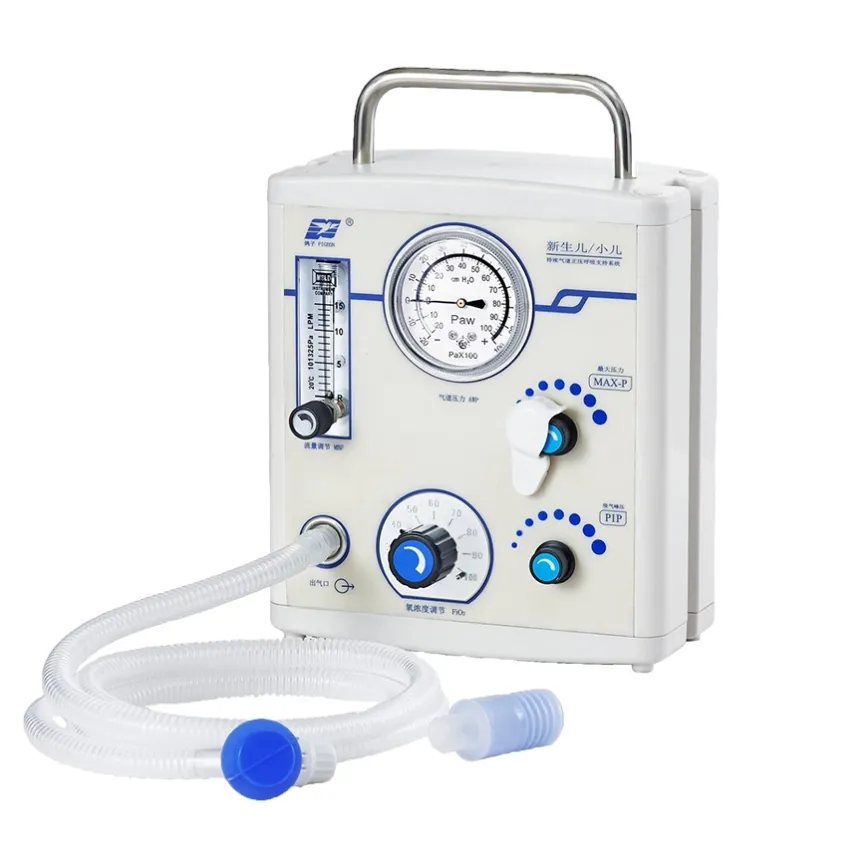
AD3000-TPB — built-in air–oxygen blender with flowmeter.
The difference, in one table
Air–oxygen blender | TPA: Not built in — gas from an external blender or flowmeter | TPB: Built in |
Flow rate | TPA: Set on the external flowmeter | TPB: 0–15 L/min, built-in flowmeter |
FiO₂ | TPA: Set on the external blender | TPB: 21%–100%, ±3% accuracy |
Gas source | TPA: External blender / flowmeter | TPB: 0.3–0.4 MPa |
Gas-pressure alarm | TPA: — | TPB: Audible alarm when the air and oxygen pressures differ by more than 0.1 MPa |
Gas intake tube | TPA: Green gas intake tube, 2.5 m | TPB: Black air high-pressure tube, 2 m, and blue oxygen high-pressure tube, 2 m |
Gross weight | TPA: 5 kg | TPB: 7 kg |
What is the same
Both are T-piece infant resuscitators for neonatal and paediatric CPAP resuscitation. Maximum PIP 60 cmH₂O, PEEP 0–15 cmH₂O, manometer −20 to 100 cmH₂O. Both ship with the T-piece circuit, five masks (XS–XL) and a 25 mL test lung, and both carry Registration No. 20162080467 (Guangdong). In use they work the same way — the only difference is where the blended gas comes from.
What comes in the box
One set per carton: T-piece circuit, five masks (XS–XL), 25 mL test lung. The gas tubing differs: the TPA ships with a green gas intake tube (2.5 m) for your external blender or flowmeter; the TPB ships with a black air high-pressure tube (2 m) and a blue oxygen high-pressure tube (2 m) for direct wall-gas connection. Order spares by model — the tubes are not interchangeable.
Before you order
Two checks. First, gas supply: the TPB's blender needs 0.3–0.4 MPa and alarms if air and oxygen pressures differ by more than 0.1 MPa. Second, what you already own: if an external blender or flowmeter is already on the trolley, the lighter TPA (5 kg vs 7 kg) slots straight in; if there is none, the TPB is the complete unit on its own. Resuscitation performance is identical either way.
Which one should you choose?
Choose the AD3000-TPB if you need FiO₂ control at the bedside without extra equipment — a delivery room or NICU that wants to set oxygen concentration directly on the resuscitator.
Choose the AD3000-TPA if your department already has an external blender or flowmeter. It is lighter (5 kg vs 7 kg) and does the same job.
About Guangdong Pigeon Medical Apparatus CO.,LTD
We are a medical device factory in Puning, Guangdong, China, founded in 1992. We make respiratory and neonatal care equipment — infant resuscitators, phototherapy lamps and CPAP/BiPAP machines — sold to nearly 100 countries. ISO 13485:2016 and CE certified. Both models are available for distribution, bulk shipment, tender cooperation and OEM.
Contact us
For pricing, MOQ, lead time, warranty and registration documents, contact us: WhatsApp / Tel: +86 13417620591 · Email: kevin@pigeon-medical.com · Website: https://pigeonmedical.online
Related products